Key Takeaways
- A sound container keeps rain out; condensation comes from moisture packed in with your belongings.
- Pack everything dry, especially appliances, garden furniture and textiles.
- Leave air gaps, raise items off the floor and use moisture absorber tubs.
- Do not store perishables, plants, animals, fuel, gas or chemicals in any storage unit.
- EXO Storage does not provide contents insurance, so check your own policy or arrange cover.
Do storage containers get damp inside?
A well maintained shipping container is weatherproof and keeps rain out, but like any unheated space it can get condensation if warm, moist air is sealed inside it. That is the honest answer, and it is worth understanding rather than glossing over, because the difference between rain getting in and condensation forming inside is the difference between a problem with the container and a problem with what you put in it. Rain ingress means a damaged or poorly maintained unit, and that should simply not happen with a sound container. Condensation is a physics problem: warm air holds more moisture than cold air, so when the temperature drops overnight, moisture in the air inside the container has to go somewhere, and it forms on the coldest surface it can find. Get the packing right and it is a non-issue for the overwhelming majority of customers. Get it wrong, by sealing damp items into an airtight box, and you can create the problem yourself.
What causes condensation in a storage container?
Almost always, moisture that went in with your belongings. The usual culprits are items packed before they were properly dry: garden furniture brought straight in from the rain, a washing machine or dishwasher that still holds water in the drum and hoses, damp cardboard, clothing or bedding that was not fully aired, or a carpet rolled up while still slightly wet. Once that moisture is inside a sealed steel box it has nowhere to go. Temperature swings do the rest. On a clear night the steel cools faster than the air inside, and moisture condenses on the walls and ceiling, then drips. This is the same effect you see on a car windscreen in the morning, and it is not evidence of a leak. The good news is that it is almost entirely preventable, and the prevention costs very little.
How do I stop condensation in a storage container?
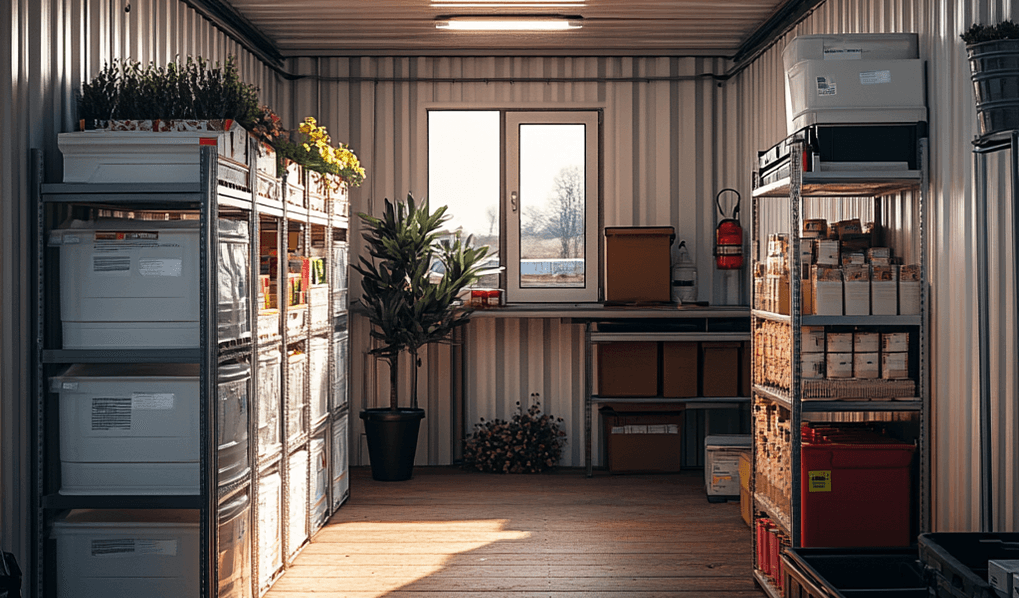
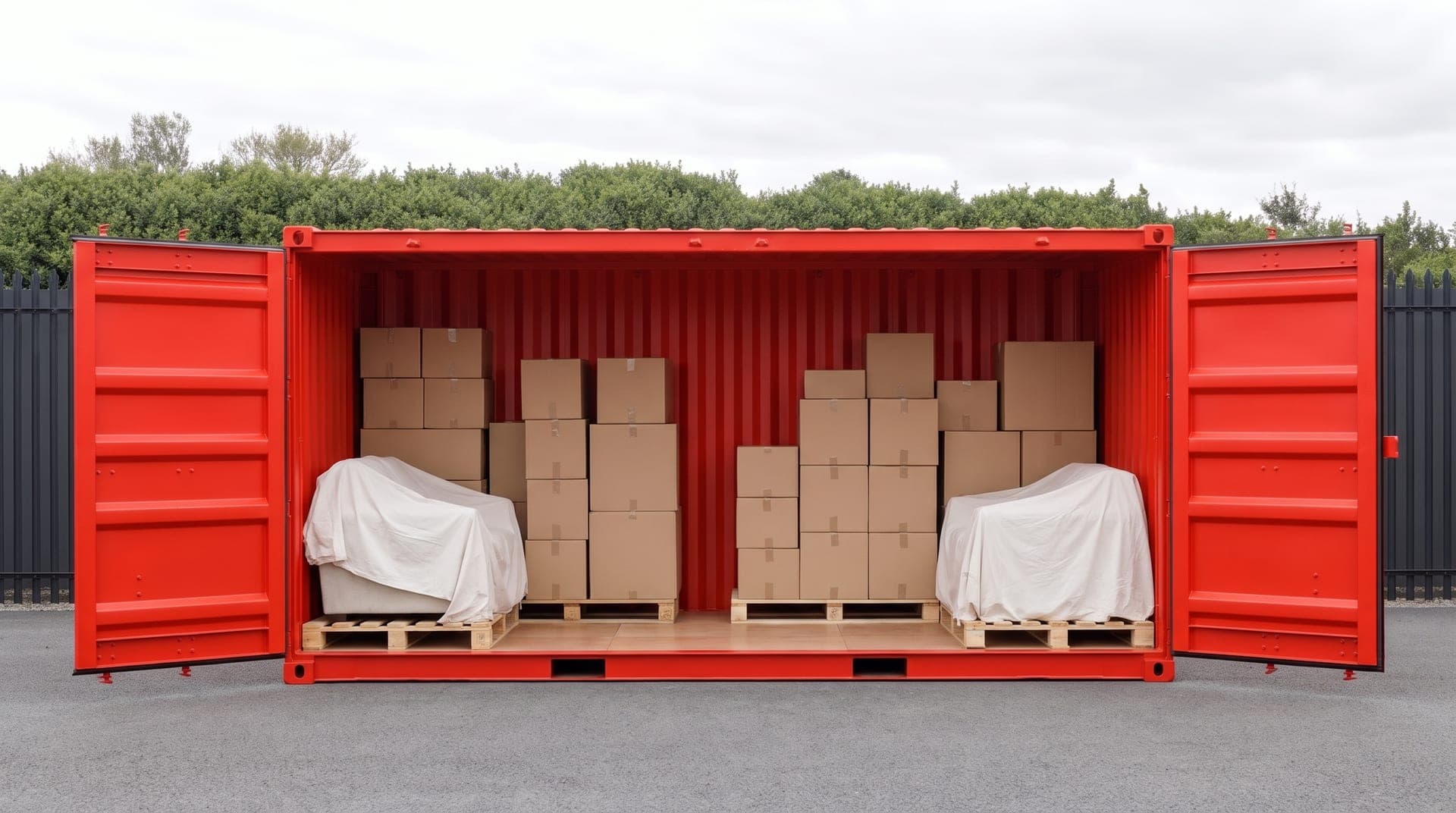
Pack dry, leave air gaps, lift things off the floor and use a few moisture absorbers. Those four steps cover it. Make sure everything going in is properly dry, and give appliances a day or two to drain and air before they are loaded. Leave a small gap between your belongings and the container walls so air can move rather than sitting still against cold steel. Stand boxes and furniture on pallets or battens rather than directly on the floor. Then put a few moisture absorber tubs around the container, especially near anything you particularly care about, and swap them when they fill. Use furniture covers or breathable dust sheets rather than sealing things in plastic, because plastic traps moisture against the item instead of letting it escape. If you are storing for a long stretch, drop in occasionally, open the doors for ten minutes and let the air change over. None of this is difficult, and it is the same advice you would get for a garage or a loft.
What should you not store in a storage container?
Some things do not belong in any self storage unit, and some are specific to unheated containers. Do not store anything perishable, anything living, or anything hazardous: food, plants, animals, petrol, gas bottles, paint thinners, solvents, fireworks, chemicals or damaged batteries. That list is standard across the industry and it exists for good reason, and the full version is in section 3 of our Terms and Conditions. Beyond that, think carefully about items that are genuinely sensitive to temperature and humidity, such as artwork, veneered or antique furniture, vinyl records, some musical instruments and delicate electronics. A container is not climate controlled, so if those items make up the bulk of what you are storing, a heated indoor unit is the better fit even though it is not what we offer. For ordinary household contents, furniture, boxes, tools, business stock and equipment, a container is entirely suitable. Our comparison of container storage and indoor self storage goes through where each format works best.
Are storage containers secure?
A steel container on a fenced, gated site with CCTV is a difficult thing to get into, and the site around it matters as much as the box itself. The container is welded steel with a substantial locking arrangement, which is a far tougher proposition than the partition walls used inside many indoor facilities. At our Cramlington site the containers sit inside a gated perimeter with CCTV coverage, and access is through an electronic fob so entry is controlled rather than open. Wherever you store, the questions to ask are the same three: is the perimeter properly gated, is there CCTV, and is access controlled and logged. A cheap unit on an open yard with a chain across the entrance is not the same product as a fenced site with CCTV and controlled access, whatever the container looks like.
Do I need insurance for a storage container?
Yes, you should arrange cover, and it is worth saying plainly that EXO Storage does not provide insurance for the contents of your container. Some storage companies bundle a policy into the price, and some sell you one at the counter. We do not, so the responsibility for insuring your belongings sits with you. In practice, many home contents policies extend to goods held in storage, sometimes as standard and sometimes for a small addition to the premium, so the first step is to ring your existing insurer and ask directly whether your policy covers items stored off site and up to what value. If it does not, specialist self storage insurance is straightforward to arrange and generally inexpensive. For business stock, check your commercial policy covers goods held away from your main premises. It takes one phone call, and it is far better to find out before you load a container than afterwards.
How do I get set up with EXO Storage in Cramlington?
Give us a rough idea of what you are storing and we will tell you whether a 10ft or a 20ft suits, then get you set up, usually within a day. The minimum hire is one week and it rolls on from there, so there is no long contract to commit to. Every container is weatherproof steel on a gated site with CCTV coverage and electronic fob access. If you have questions about condensation, packing or what fits, ask when you call and we will give you a straight answer rather than a sales pitch. Call 01670 332868, visit us at 1 Dene Court, Bassington Lane, Cramlington, just off the A1 and A19, or send your list through the contact form. Our storage FAQ answers the common questions, and if you are still deciding on size, our container size guide will help. We serve Cramlington, Newcastle upon Tyne, Blyth, Whitley Bay and across Northumberland and Tyne and Wear.
Why Choose EXO Storage?
- Weatherproof steel containers, maintained so rain stays out.
- Gated perimeter with CCTV coverage and electronic fob access.
- Straight advice on packing and sizing rather than a sales pitch.
- One week minimum hire, then rolling, so you are not tied in.
- Cramlington site off the A1 and A19, usually set up within a day.