Key Takeaways
- Start a week before the trades do, so you load in your own time rather than in a rush.
- Load in reverse order of when you need things back, with end-of-project items right at the back.
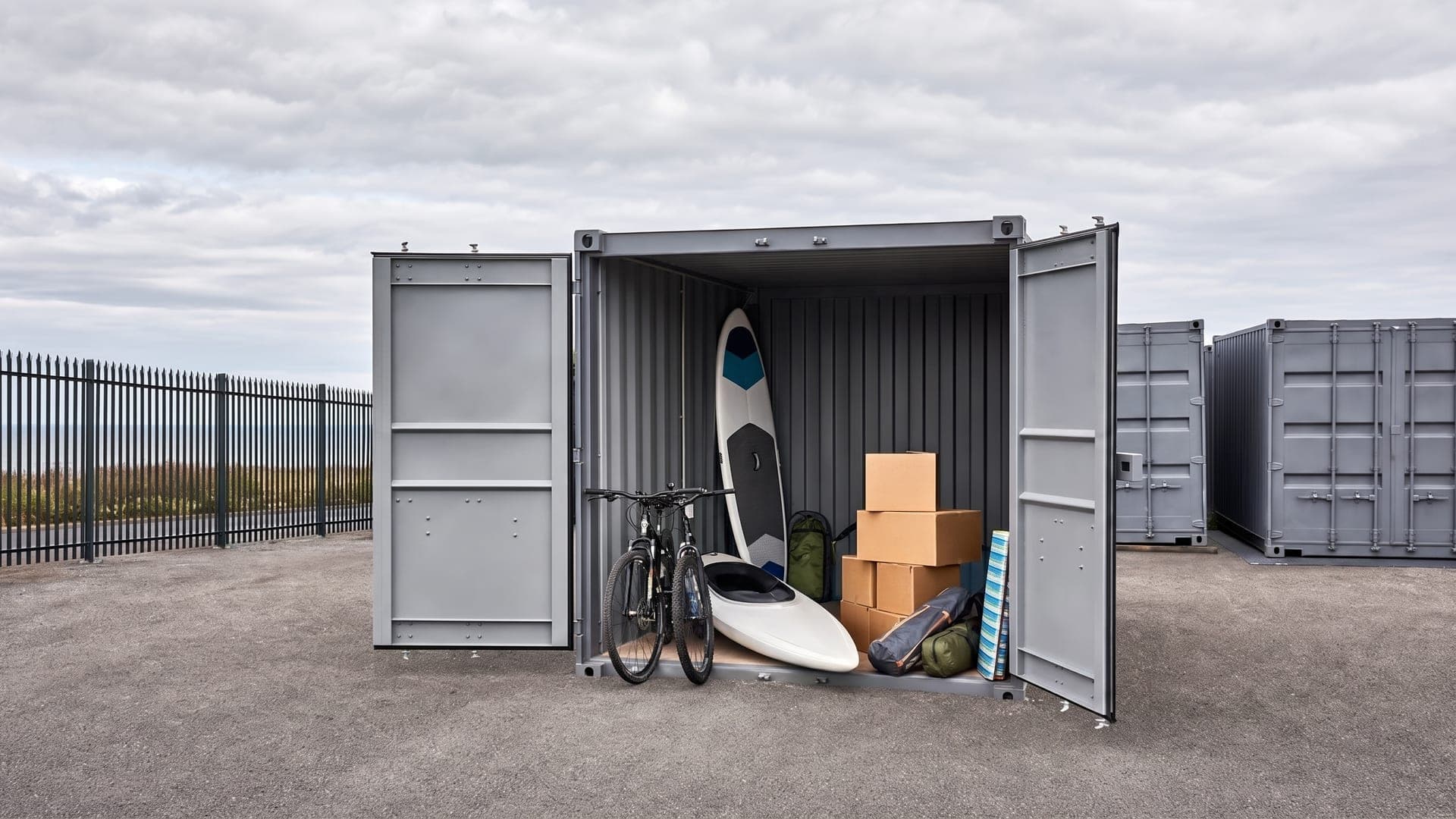
- A 10ft container suits a kitchen, bathroom or a couple of bedrooms. A 20ft suits a full renovation.
- Renovations overrun, so keep the container until the dust has settled rather than working to a guessed end date.
- Check whether your contents insurance covers goods in storage before you load, not after.
Why do people put furniture into storage during a renovation?
Because there is nowhere else for it to go. Most houses around Newcastle and Northumberland are not big enough to absorb the contents of one room into the others. The moment a kitchen or bathroom comes out, everything that lived in it has to sit somewhere. Usually the dining room becomes a dumping ground, the landing narrows to single file, and the family lives in two usable rooms for three months. The second reason is damage. Renovation work creates brick dust, plaster dust and sanding dust in quantities people badly underestimate, and it gets everywhere however many dust sheets go up. Sofas, mattresses, wardrobes and anything upholstered come out of a building site looking tired in a way that never fully comes back. The third reason is the trades themselves. A joiner or plasterer working around a room full of stacked furniture works slower, and the whole job drags. Clearing the space properly is often one of the best decisions you make on the project. Furniture storage in Cramlington, a short drive from most of Newcastle and south east Northumberland, keeps your things safe and out of the way until the house is ready.
When should furniture move out?
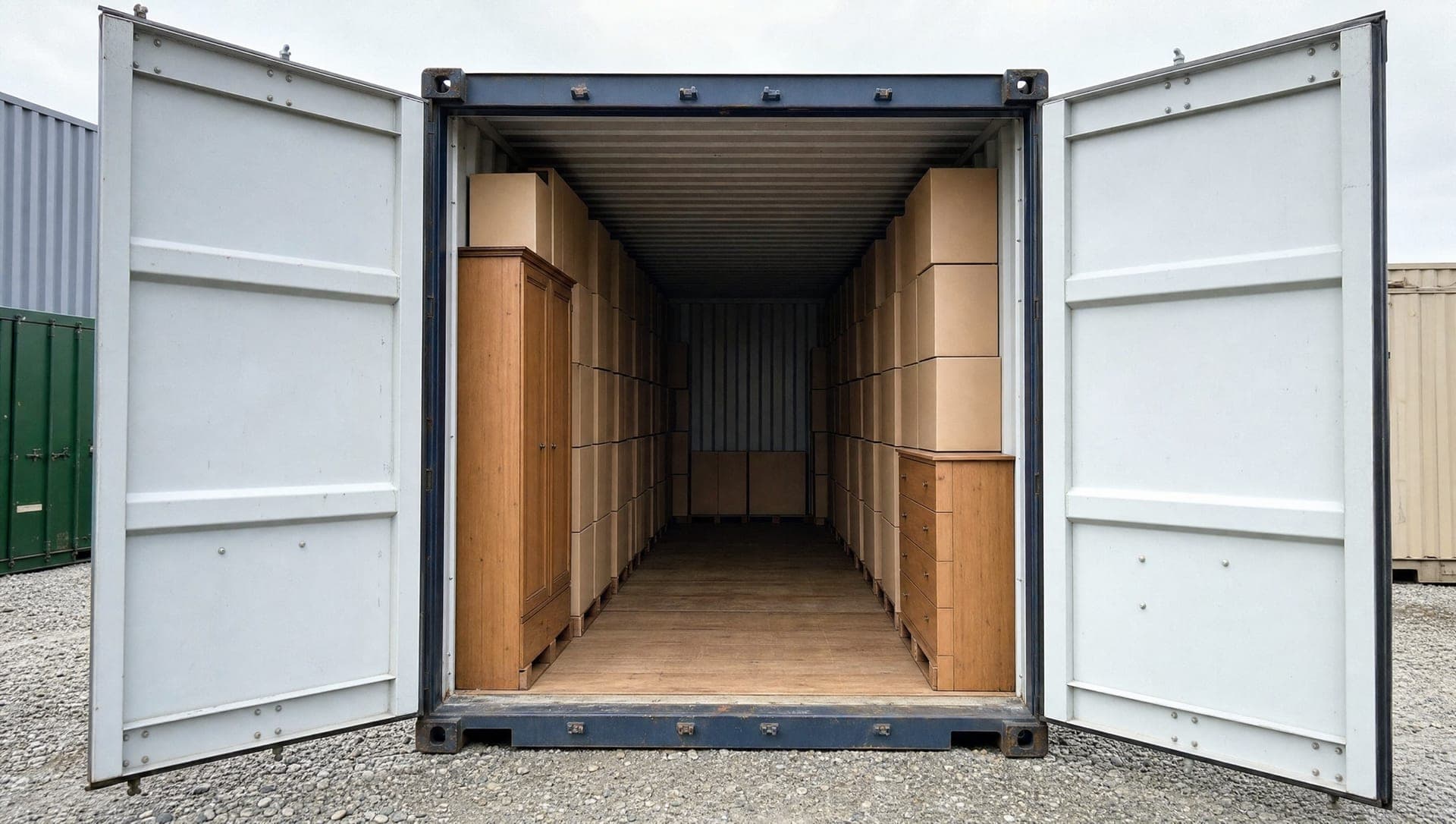
Earlier than most people plan for. The instinct is to wait until the builders arrive and shift things at the weekend, but first fix usually starts sooner than expected, and you end up carrying a wardrobe downstairs while someone is running cable through the hallway. If you are taking a container, start a week before the trades do, so you can load in your own time rather than in a panic. It is also worth loading in reverse order of when you want things back. Anything you will not need until the job is finished, such as pictures, books, spare bedding and out-of-season clothes, goes in first and at the back, while anything you might need to dig out halfway through stays near the doors. Our guide to packing a storage container covers loading order in more detail. It matters on a renovation more than almost anywhere else, because renovations nearly always run longer than planned.
Which furniture goes into storage, and what stays?
Work room by room and be honest about what you will actually use. Everything from the room being worked on goes, obviously. Beyond that, the things worth moving out are the bulky, fragile or hard-to-clean ones: upholstered furniture and mattresses, rugs, pictures and mirrors, books and ornaments, anything wooden with a finish on it, and appliances being replaced, until you decide what to do with them. What stays is the short list that keeps the house liveable: a bed each, somewhere to sit, a table, enough kitchen kit to feed people, the washing machine if it is staying, and a fortnight of clothes. Most families find they can live off a small core for a couple of months. Moving the rest into temporary storage is what turns a chaotic house back into somewhere you can shut a door and relax. If you are between properties rather than staying put, our moving home storage page covers that situation instead.
Do I need a 10ft or a 20ft container?
We only do two sizes, which keeps the decision simple. A 10ft container takes roughly the contents of one large room or a packed single garage, which is about right for a kitchen refit, a bathroom, or clearing one or two bedrooms. A 20ft container takes roughly the contents of a three or four bedroom house, so it is the one for a full renovation, a loft conversion that displaces a whole floor, or an extension where most of the ground floor is being stripped. The mistake to avoid is sizing for what you think you are storing rather than what ends up going in. Renovations spread. A kitchen job becomes a kitchen and a knocked-through dining room, and the pile of furniture doubles. If you are genuinely on the line between sizes, tell us what is on the list and we will give you a straight answer. There is more detail in our guide to storage container sizes.
How long will I need it for?
Longer than the estimate. That is less a criticism of builders than a fact about renovations. Materials arrive late, something turns up behind a wall that nobody planned for, and the plasterer can only start once the electrician has finished. A job planned for eight weeks can easily run to twelve. So avoid guessing a fixed end date. Start when the trades start, and keep your furniture in storage until the house is actually ready. Whether the job takes a few weeks or turns into long-term storage over several months, the container is there for as long as the project needs. Keep it until the decorating is done and the dust has settled, not just until the last trade leaves. Moving furniture back into a room that still needs a final coat of paint is how good furniture picks up marks.
How do I protect furniture from dust, damp and paint?
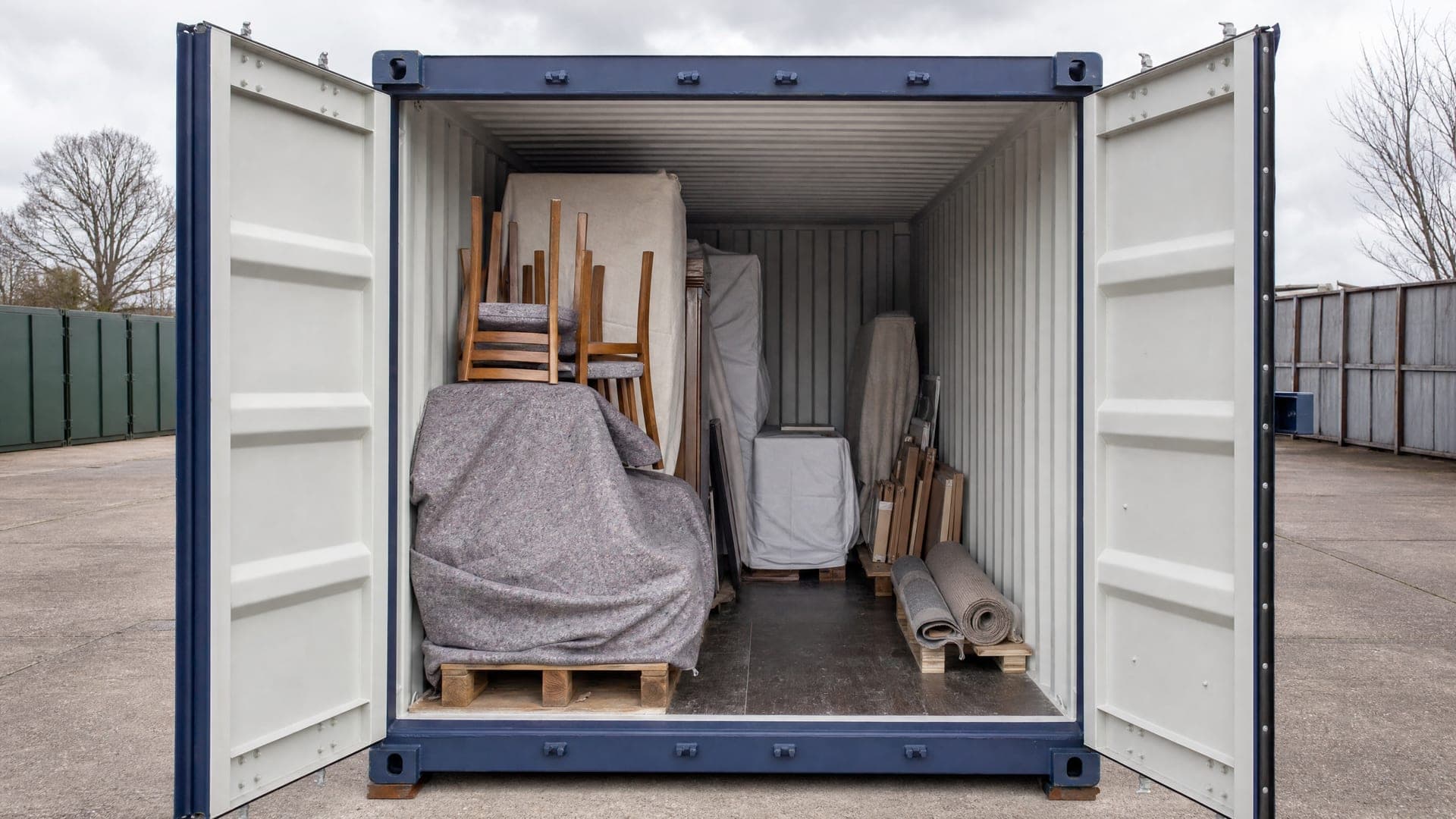
Getting it out of the house deals with the dust and the paint. A bit of preparation deals with the damp. A steel container is weatherproof but not heated, so the temperature inside follows the weather, and warm damp air meeting a cold roof produces condensation. Four habits sort out almost all of it. Everything goes in dry, which matters most for anything that has been near fresh plaster, because it puts a lot of moisture into the air and into whatever was standing nearby. Get things off the floor on pallets or battens. Leave a small gap between your stack and the container walls so air can move. And cover with dust sheets or breathable covers rather than sealed plastic, because plastic holds moisture against the surface and often does more harm than no cover at all. Our post on whether storage containers are damp and secure goes through this properly.
Can the container double as a store for tools and materials?
Plenty of people use it that way, and on a longer project it is often the main reason they take one. Timber, plasterboard, tiles, kitchen units and flooring tend to arrive well before they are needed, and leaving pallets of materials in a front garden or an unlocked garage is asking for trouble. A gated site with CCTV and fob access is a better home for them, and the trades are not working around stock in the room they are trying to finish. Because you drive right up to the container doors, loading a van in the morning takes minutes. If you store materials alongside furniture, keep them at the front and leave an aisle down one side so you can get in without unpacking everything. Tradespeople across Newcastle and Northumberland use us this way all year round, and our post on how tradespeople use storage units covers that setup.
How do I get set up in Cramlington?
Call us with a rough list of what you are storing and when the work starts, and we will tell you which size fits and what is available. We can usually get people set up within a day, which matters when a start date moves forward at short notice. You get your own container, your own lock and fob access to the site, so you come and go on your own schedule. Two practical things to sort before you load. First, check whether your home contents policy covers goods held in storage, because we do not provide cover for container contents. Second, bring pallets, dust sheets, tape and more boxes than you think you need. Call 01670 332868, use our contact form, or read the storage FAQ. We are at 1 Dene Court, Bassington Lane, Cramlington, just off the A1 and A19, serving Newcastle upon Tyne, Blyth, Whitley Bay, Morpeth and across Northumberland and Tyne and Wear.
Why Choose EXO Storage?
- Storage that keeps pace when a project overruns, which renovations almost always do.
- Drive-up access, so furniture goes in and materials come out without trolleys or corridors.
- A gated site with CCTV and fob access for things that would otherwise sit in a front garden.
- Two clear sizes, and honest sizing advice before you book.
- A Cramlington site just off the A1 and A19, close to Newcastle and the Northumberland towns.